Neonatal Thyroid Screening
A healthy beginning
One of the most important yet routine tests a newborn undergoes is Neonatal thyroid screening. This simple blood test plays a crucial role in identifying congenital hypothyroidism (CH), a condition in which the newborn’s thyroid gland does not produce enough thyroid hormones. These hormones are essential for healthy brain development, growth and metabolism. That’s why early detection through screening is vital as it ensures timely treatment, helping affected babies grow into healthy children.
The significance of Neonatal Thyroid Screening
Neonatal Thyroid should not be overlooked as the thyroid gland produces hormones that are vital for normal growth and neurological development. In newborns, especially during the first few months of life, the brain develops rapidly. Any deficiency in thyroid hormones during this period can lead to irreversible intellectual disabilities, growth delays and other long-term complications.
One must keep in mind that symptoms of congenital hypothyroidism are often subtle or absent at birth. Only physical signs have to be relied on which can easily result in missed diagnoses. This is why screening every newborn is a must.
The Screening process
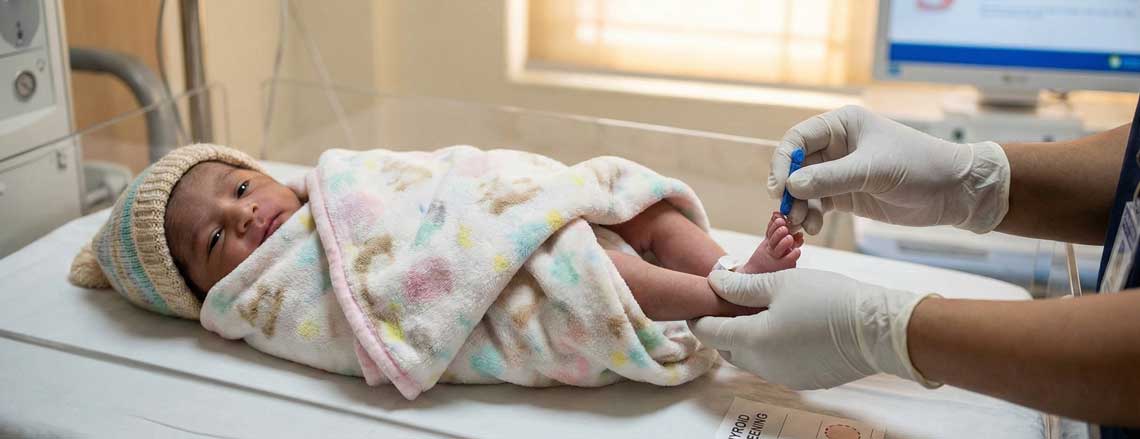
So what is the process of screening? Neo natal thyroid screening is typically performed within the first 24 to 72 hours after birth. A few drops of blood are collected from the baby’s heel onto a special filter paper card. This is known as a “heel-prick test.” The sample is then sent to a laboratory to measure levels of Thyroid-Stimulating Hormone (TSH) and sometimes Thyroxine (T4). Elevated TSH levels generally indicate that the thyroid gland is not functioning properly.
The test is quick, safe and causes only minimal discomfort to the baby. The results are usually known within a few days. If the screening points to a possible thyroid issue, further confirmatory tests have to be conducted.
Course of action for positive screenings
It has to be kept in mind that a positive result does not immediately mean the baby has congenital hypothyroidism. What is does imply is the need for additional testing. If confirmed, treatment usually begins right away. The standard therapy is daily oral administration of levothyroxine, a synthetic form of the thyroid hormone. When started early, ideally within the first two weeks of life, this treatment is highly effective.
Benefits of Early Detection
Early detection through neonatal thyroid screening offers several important benefits:
- Normal brain development: Prevents cognitive impairment and learning disabilities.
- Healthy growth: Supports proper physical development and prevents stunted growth.
- Prevention of complications: Avoids issues such as lethargy, feeding difficulties, jaundice, and poor muscle tone.
- Cost-effective healthcare: Early treatment reduces long-term healthcare expenses associated with untreated thyroid disorders.
Screen to save lives
Neonatal thyroid screening is a simple yet life-saving test that ensures every newborn gets the healthiest start possible. By identifying congenital hypothyroidism early, healthcare providers can initiate timely treatment and prevent long-term developmental challenges.